
Learn About Medical Therapy for Weight Loss

Weight Loss Medications at HHNY
1. The Big Picture
At Happy Healthy NY, we treat obesity as what it is: a chronic, progressive disease of biology, not willpower. Extra weight isn’t just about appearance—it raises the risk for diabetes, high blood pressure, fatty liver, heart disease, sleep apnea, and even depression.
The good news? Weight loss medications now make lasting results possible.
- GLP-1 medications (like Ozempic®, Wegovy®) help most people lose 15–20% of body weight.
- GIP/GLP-1 combination therapy (like Mounjaro®, Zepbound®) can help patients lose 20 – 25% of body weight.
- These medications don’t just help with weight—they also improve blood sugar, cholesterol, blood pressure, liver health, and even mood and cognition.
At HHNY, we combine these tools with lifestyle guidance and mental health support, because true health means treating the whole person.
👉 [Start your journey today — fill out our health history form]
2. How the Medications Work
GLP-1 and GIP medications mimic natural hormones in your gut and brain:
- Reduce appetite and cravings (“food noise” quiets down)
- Increase satiety (you feel full sooner and stay full longer)
- Balance blood sugar & insulin (reducing diabetes risk)
- Support heart and brain health (lowering cardiovascular risk, improving cognition)
In short: they reset your body’s biology to work with you, not against you.
3. What to Expect
Weeks 1–4: Appetite fades, cravings calm down, water weight and inflammation drop (10–15 lbs for some).
Weeks 5–20: Steady fat loss, improved energy, clothes fitting differently, lab markers improve.
Months 6+: Average 15–25% body weight loss, better sleep, lower blood pressure, reduced risk of heart attack, stroke, and fatty liver disease.
4. Safety & Side Effects
Common: Nausea, stomach upset, constipation (constipation can be serious, we recommend being proactive in preventing it)
Less common: Gallstones (can happen with any rapid weight loss), reflux, diarrhea
Rare but serious:
- Pancreatitis (so rare it was more common in the placebo group in some trials)
- Contraindicated for people with MEN2, a special type of thyroid cancers. (this is a highly heritable form of thyroid cancer—if several people in your family have had thyroid cancer, then these medications are not for you)
- People with uncontrolled diabetes and very high blood sugar can have vision problems from fixing their sugar too quickly with GLP-1/GIP medications (this is called NAION).
We’ll review your health history carefully to ensure safety.
For the overwhelming majority of people seeking trying to lose weight, GLP-1 agonists are very safe, and they have a wealth of pleiotropic effects (beneficial side effects) that make them immensely beneficial throughout the brain and body. For the majority of people, taking a GLP-1 agonist isn’t just safe, it is healthy.
5. Beyond GLP-1s
For patients who prefer alternatives—or when insurance coverage is limited—we also prescribe other medications, sometimes in combination with GLP-1/GIP agonists. These may include:
- Phentermine
- Phentermine-Topiramate
- Naltrexone-Bupropion
- Bupropion
- Topiramate
- Metformin
- Orlistat
- Dapagliflozin
- Zonisamide
While these generally produce 3–12% weight loss, they can be effective when tailored to the right patient.
6. The HHNY Difference
- Expert Guidance: Care from a clinician trained in both addiction recovery and obesity medicine
- Personalized Plans: No cookie-cutter dosing; we adjust based on your biology and lifestyle. And once you’ve hit your goal, we figure out which maintenance plan is ideal for you.
- Accessible Support: Text directly at 833HAPPYNY
- Whole-Person Philosophy: We address not just weight, but also your mental, emotional, and cardiovascular health
7. Deep Dive into the Science
🧠 Brain & Mood: GLP-1s reduce inflammation in the brain, may improve memory, and can ease depression/anxiety.
- GLP-1 agonists have been found to be safe and effective in patients with serious mental illness.
- A 2025 meta-analysis has found no significant link between GLP‐1 agonist use and increased suicidal ideation or behavior.
- Individuals with mental illnesses such as major depressive disorder, bipolar disorder, and schizophrenia are 2-5 times more likely to be overweight/obese and suffer from additional cardiometabolic diseases.
- Obesity has been demonstrated to worsen severity of mood disorders, and mood disorders have been shown to increase risk of metabolic issues such as diabetes.
- Modifiable lifestyle variables such as diet, substance use, sleep habits, and lack of exercise contribute to weight gain and mental illness.
- Unfortunately, many critically important psychiatric medications are known to have adverse metabolic effects and cause weight gain. People with serious mental illness live 14-20 years, and the cardiometabolic side effects of antipsychotics contribute to these disastrous outcomes. GLP-1 agonists can help to balance the scales and help people live longer.
- GLP-1 agonists exert neuroprotective and antidepressant effects, and they can be immensely helpful in the setting of serious mental illness.
- There are mountains of data indicating psychiatric, neurological, and cognitive benefits from the use of GLP-1 agonists, and these medicines are vastly under-prescribed to patients with mental illnesses despite the efficacy and safety of these drugs across populations with serious mental illness.

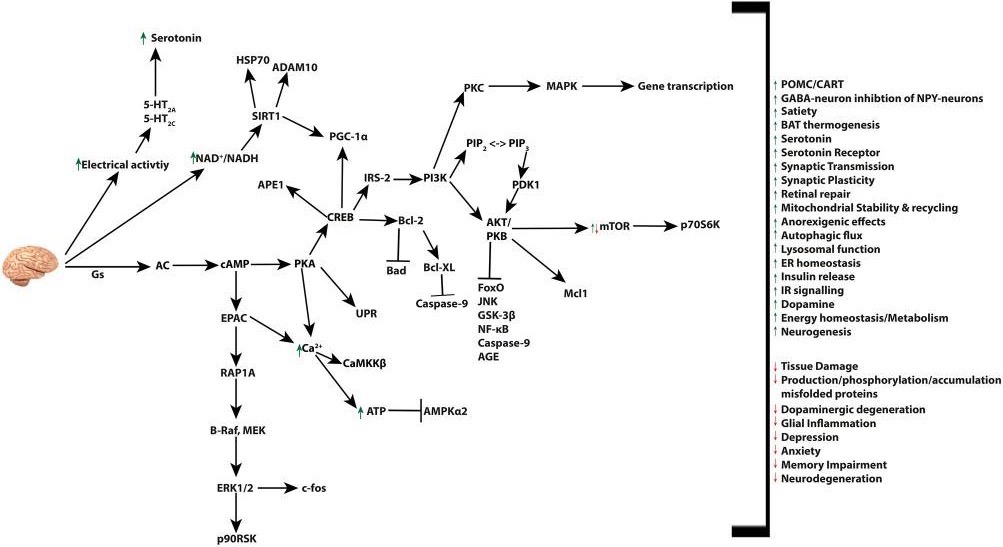
❤️ Heart & Longevity: Studies show fewer heart attacks, strokes, and even reduced risk of dementia.
- Cardiovascular function: GLP-1 can improve cardiac function by increasing glucose uptake, improving coronary flow, and secreting atrial natriuretic peptide (ANP). They also decrease atherosclerosis and platelet activation.
- In the event of heart attacks (aka “myocarial infarction”), GLP-1 agonists reduce their severity, and in acute heart failure GLP-1 agonists improve the function (AKA “ejection fraction”) of the left ventricle (the part of the heart that pumps blood to the rest of the body).
- GLP-1 increases microvascular perfusion in skeletal and cardiac muscle, which may help protect the heart and cardiovascular system.
- Increased atrial natriuretic peptide (ANP): decreases blood pressure via arterio/venodilation, increased excretion of sodium by the kidneys, countering action of angiotensin II, aldosterone, and vasopressin. ANP improves mitochondrial function. We’re still discovering other pathways affected by ANP and learning that it plays a beneficial role in lipid mobilization within white adipose tissue, skeletal muscle fat oxidation, and dissipation of energy in brown adipose tissue. ANP doesn’t just make our cardiovascular system work better, it helps our bodies with glucose homeostasis, fatty acid metabolism, and insulin sensitivity!
- Brain function: in the brain GLP-1 affects satiety, thermogenesis, neurogenesis, neurodegeneration, retinal repair, and energy homeostasis.
- GLP-1 agonists decrease depression, anxiety, and memory impairment.
- GLP-1 agonists may lower risk of ischemic stroke by 17%!
- Did you know that GLP-1 agonists are so neuroprotective that they are being studied as therapies for Alzheimer’s and Parkinson’s Disease?
- GLP-1 agonists slow the shrinking of brain regions involved in memory, learning, language, and decision-making by almost 50% compared to a placebo.
- GLP-1 agonists may be able to remyelinate (repair) neurons in multiple sclerosis, and it’s already been demonstrated in mice.
- Cancer: GLP-1 agonists reduce your risk of 13 types of cancer.
- Aging: A clinical trial with individuals who had HIV-associated lipohypertrophy, a condition linked to accelerated aging, found that treatment with semaglutide (1mg weekly( resulted in an average reversal of biological age by 3.1 years in this 32 week trial.
- GLP-1 agonists cause a reduction of neuroinflammation, an increase in synaptic functioning, as well as the restoration of brain pathways of insulin signaling that may lead to improved memory formation.
- GLP-1 agonists are neuroprotective and prevent amyloid beta (Aβ) accumulation and tau beta tangle deposition, which are the hallmark findings of Alzheimer’s Disease.
- These medications reduce oxidative stress, improve mitochondrial dysfunction and apoptosis pathways, elevate brain-derived neurotrophic factor and glial cell line-derived neurotrophic factor synthesis resulting in neurogenesis.
🦠 Gut & Inflammation: These drugs calm chronic inflammation, lower fatty liver disease risk, and may even improve autoimmune conditions like IBD.
- In ulcerative colitis, GLP-1 medications have demonstrated an ability to protect the bowels from injury to the mucosal wall of the bowels.
- GLP-1 blocks the production of inflammatory cytokines that cause UC flares and cause damage to bowel tissue.
- The body naturally releases GLP-1 in response to inflammatory gut injury, but natural GLP-1 has a half life of 2 minutes. Semaglutide has a half life of 7 days, so the protective effect will last 28-35 days per dose.
- Although GLP-1 is a gut hormone, GLP-1 medications have anti-inflammatory effects throughout the entire body.
- The vast majority of people with ulcerative colitis have a good experience on semaglutide. About 10% of people with ulcerative colitis stop GLP-1 therapy because of side effects (not related to IBD flares). This number is about the same as people without ulcerative colitis (6-14%).
- An April 2024 study appearing in the Journal of Inflammatory Bowel Diseases concluded that “there was no increased risk of IBD-specific adverse events with semaglutide use.” In that study, over 47,000 patients with IBD experienced no differences in any-cause hospitalization or need for steroid use while they were taking semaglutide. These drugs appear to be safe and effective in people with IBD.
- IBD patients on GLP-1 agonists have fewer adverse events, including need for steroids, IBD-related hospitalization, and IBD-related surgery.
- Visceral fat and ectopic liver fat reduction: did you know that semaglutide and tirzepatide are effective single therapies for nonalcoholic fatty liver disease (NAFLD)?
- Visceral fat causes insulin resistance & diabetes, peripheral artery disease, cardiac disease, and inflammatory disorders. It is linked to lung cancer, gastric cancer, colorectal cancer, and high blood pressure.
- GLP-1 agonists act directly on white adipose tissue, promoting its conversion to brown adipose (good fat), reduce the synthesis of white adipose tissue, and reduce the thickness of visceral fat and ectopic liver fat.
🏋️ Pleiotropy throughout the body: Put it all together and see that these medications are tuning a happier, healthier new you.
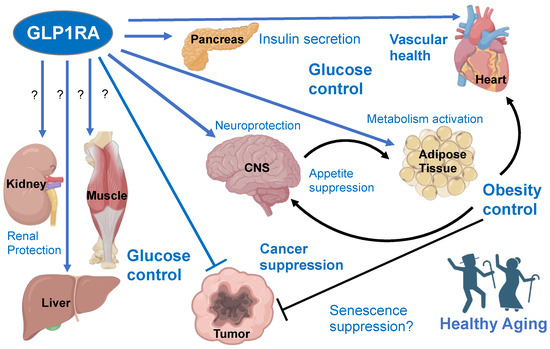

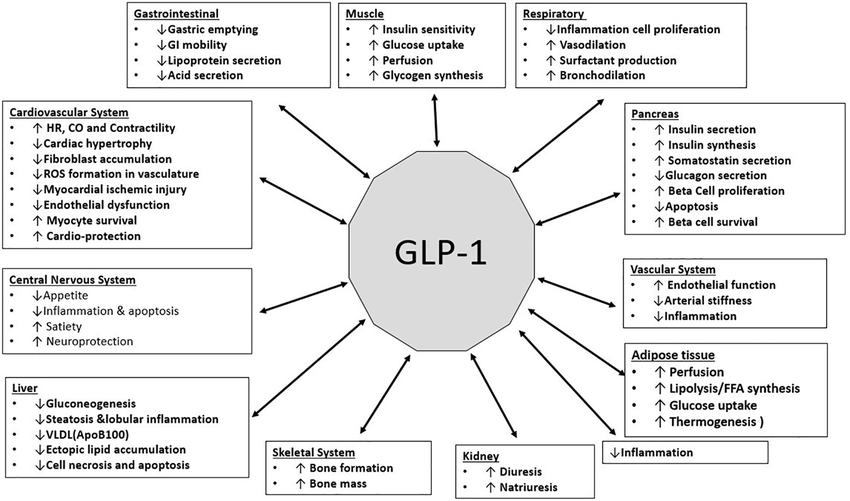
Patients routinely say they feel like an entirely new person on their GLP-1/GIP weight loss journey, and you can see why. These medications have far reaching benefits throughout every system in the body.
8. Ready to Begin?
Take the first step toward your healthiest, happiest self.
👉 [Fill out your health history form here]
 Evidence-based care for whole-person health.